
There is a particular shade of purple that you are, theoretically, allowed to wear today. For most of human history you were not. The colour itself didn't change. The power structure around it did.
What made Tyrian purple so rare?
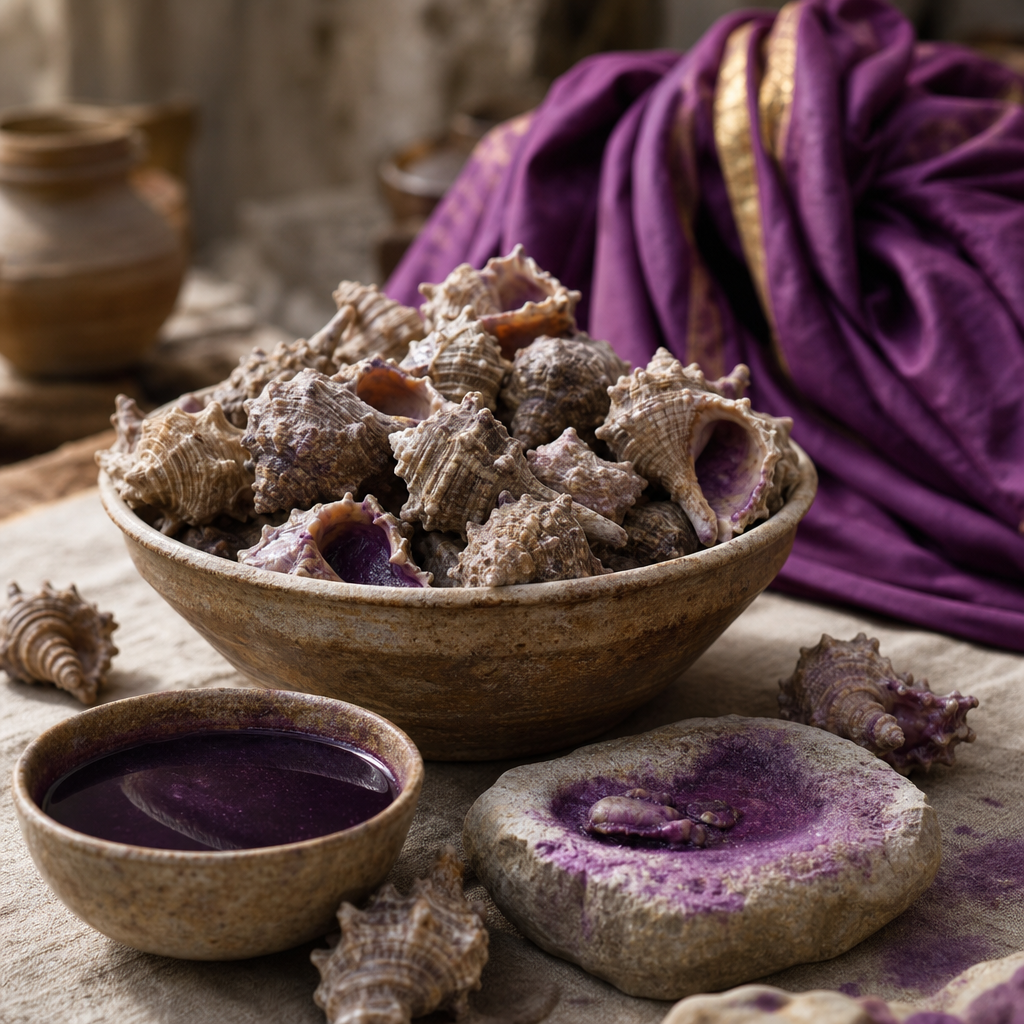
Tyrian purple – extracted from the mucus gland of a sea snail called Murex brandaris – cost, at various points in the ancient world, more than gold by weight. Producing a single pound of the dye required something in the region of four million snails, each one harvested and crushed by hand. The smell was reportedly catastrophic. The colour was extraordinary: a deep, shifting red-purple that didn't fade in sunlight the way most natural dyes did. And because it was so expensive to produce, wearing it became the fastest possible way to signal that you had money, power, and the military capacity to stop anyone taking either away from you. Roman emperors made it their own. Byzantine law eventually made it illegal for anyone outside the imperial family to wear it at all.
How Sumptuary Law Worked
This is how sumptuary law worked. It ran through European society for centuries. England had versions of it from the 1300s right through to the 1600s – precise, detailed rules about who could wear what colour, what fabric, and how much fur was permissible on a hem. Peasants were largely confined to undyed or locally-dyed wool: earthy browns, muddy yellows, the particular grey-beige you get when you boil wool in water and hope for the best. Crimson was for the wealthy. Gold thread was for royalty. The logic wasn't just snobbery (though it was absolutely also snobbery): it was a visual passport system. One that let you read a person's entire social position at a glance, from across a field, because their clothes told you exactly where they stood.
Then a teenager ruined everything.
When did purple become available to everyone?
In 1856, an eighteen-year-old called William Perkin was attempting to synthesise quinine in a makeshift laboratory in his bedroom in east London. He failed spectacularly, producing instead a brownish sludge that, when diluted, turned a vivid, brilliant purple. He patented it, called it mauveine, and within a year it was being manufactured at industrial scale. Suddenly, purple – the colour that had required an emperor's treasury and four million dead snails – could be printed onto fabric for next to nothing and sold in any draper's shop in the country. Queen Victoria wore it to the Royal Exhibition of 1862 and the fashion press went into raptures. Every woman who could afford a few yards of cotton could now dress in the colour of Roman emperors. The sumptuary laws were long gone by then, but the social meaning of colour had been enforced by cost long after the legislation disappeared. Perkin dissolved that in an afternoon.
For more on how colour has dictated spending power across history, there's a good read here: The Blue That Blew the Budget
The thing is, fashion has always been about permission before it's been about aesthetics. What you wore wasn't a personal choice for most of human history – it was a regulated fact of life, enforced first by law, then by cost. Perkin's accidental purple was just the moment the lock finally broke. Every cheap, brilliantly-coloured thing in your wardrobe is, in a small way, a little piece of that.
Questions this raises
- Why was purple restricted to royalty?
- Are there still colours with social meaning?