
Walk past a painted wall in any British city and you're probably clocking the letters, the throw-up, the piece, whoever got up highest. What you're not clocking is that the writer who did it was making the same agonised calculation a Florentine painter made in 1430: this colour costs how much?
Pigment Has Always Had a Price
Pigment has always had a price, and that price has always been political. In the Renaissance, ultramarine blue – the stuff ground from lapis lazuli hauled overland from Afghanistan – cost more than gold by weight. Patrons specified it in contracts. Artists rationed it by the brushstroke, and apprentices were instructed never to mix it unless someone senior was watching. The colour itself was a budget line.
Nobody sat down at the end of the fifteenth century and decided ultramarine would be precious. It was just the physics of the world: one mountain range, one mineral, one gruelling trade route. Suddenly the Virgin Mary's robe becomes a status symbol because that shade of blue was genuinely hard to get hold of.
What do street artists spend on materials?
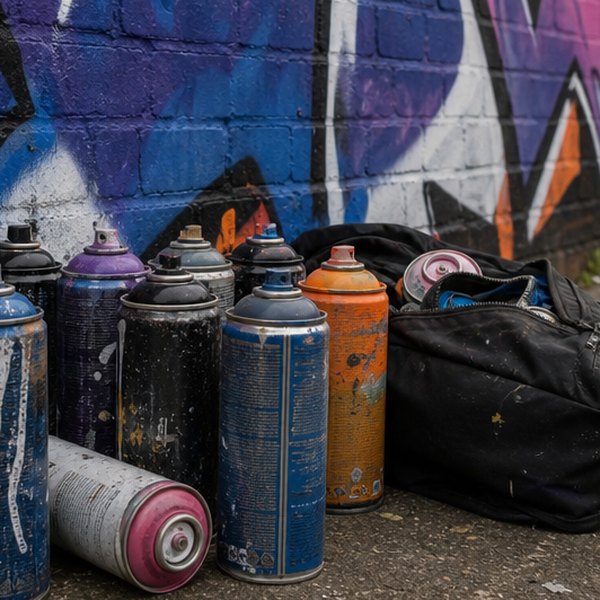
Now picture a writer in 2024 standing in front of a brick wall in Bristol or Manchester with a rucksack full of cans. The basic colours – your standard reds, mid-blues, clean whites – run at roughly £5 to £8 a can from a decent supplier, and a full piece might eat through fifteen to twenty cans. That's a fair amount of money before you've even looked at your caps. But then someone wants chrome. Or a particular opaque black that covers brick without going patchy, or a silver that stays bright in weather. Specialist fills – the colours with specific chemical formulations, high pigment loads, fading resistance – cost noticeably more. Not "a bit more". Sometimes nearly double.
Why is graffiti spray paint so expensive?
The reason is almost embarrassingly familiar. Chrome pigments are complex to manufacture. True blacks with genuine fade resistance use carbon formulations that aren't cheap to stabilise, and some colours require a higher ratio of actual pigment to carrier. Which is to say: the economics of scarcity and chemistry that rationed lapis lazuli into the hands of a few Venetian masters are still sitting there, perfectly intact, just wearing different packaging and sold out of a unit in Stoke-on-Trent.
For a broader look at how pigment prices shaped art history, The Colour That Cost More Than Gold goes into it properly.
Caps Are Their Own Economy
Caps matter too, and that's another hidden economy entirely. A German hard cap versus a New York fat cap versus a skinny female cap – these affect the spray pattern, the line width, the amount of paint burned per pass. Serious writers maintain a collection of them and treat certain caps with the same reverence a printmaker has for a good screen. Cheap individually. The habit of buying them adds up.
What's interesting is that none of this is unique to graffiti. Every tradition that uses colour has had this conversation – theatre, printmaking, textiles, tattoo ink. The specific colours that do the work you actually need always cost more than the ones you could manage without. The wall changes. The problem with blue doesn't.
Questions this raises
- How has the cost of spray paint changed?
- Is street art a viable career?