
In 1637, the Dutch were paying the equivalent of a skilled craftsman's annual wage for a single tulip bulb. Not a garden full of them. One bulb. The variety was called Semper Augustus, it was famously stripy, and the people buying it were not, by and large, idiots. They were rational actors inside a market that had its own internal logic – right up until the morning it didn't.
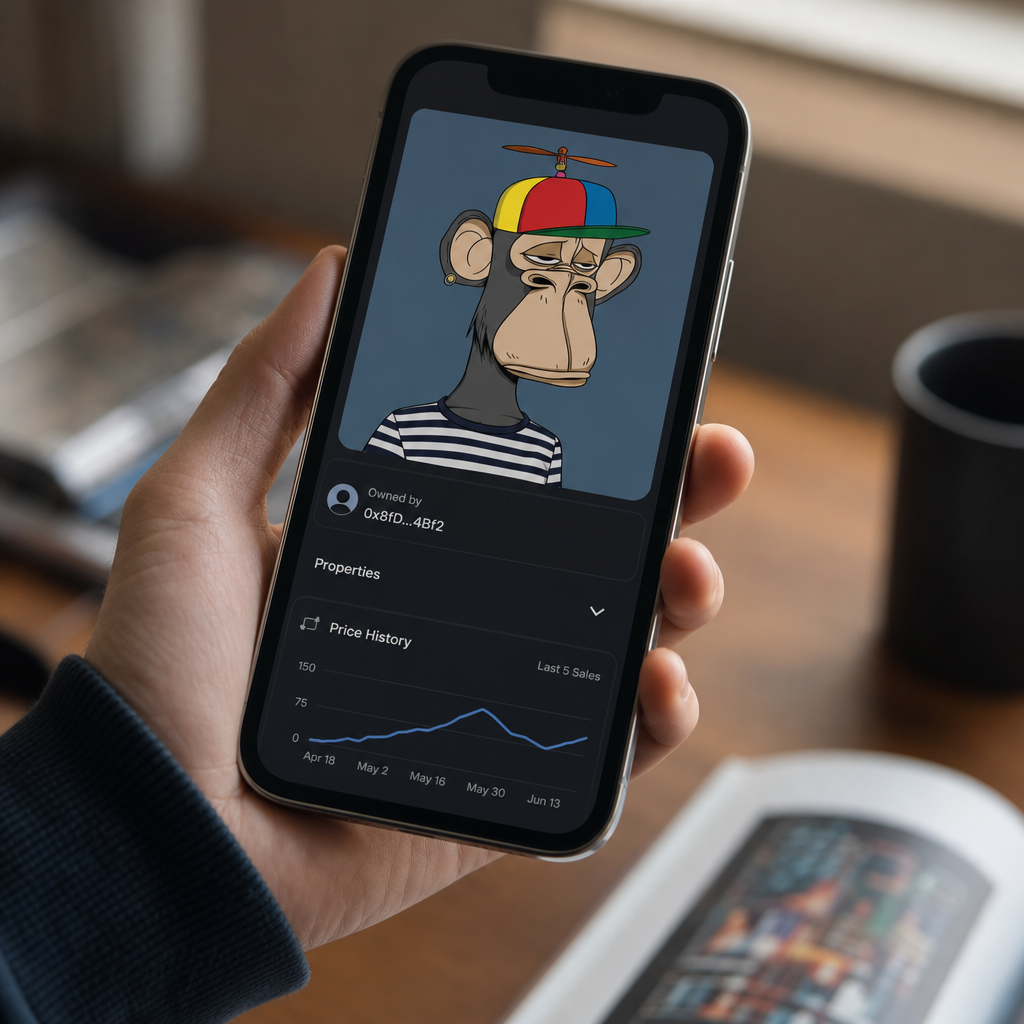
Which brings us, tidily enough, to a JPEG of a cartoon monkey.

The NFT Boom, Described Properly
The NFT boom of 2021 and 2022 is usually described as a bubble, and that is technically correct but slightly misses the point. It's the same way you could describe a tulip as "just a flower" and call it a day. What made NFTs interesting, properly interesting, was the precise mechanism by which they held value. Understanding it tells you something genuinely strange about what art is, what ownership is, and what money is.
What You Were Actually Buying
Here is the actual machinery. When you bought an NFT, you were not buying the image. The image sat on a server somewhere and, yes, anyone could right-click it and save a copy. What you were buying was a line in a smart contract on a blockchain – a publicly visible ledger that said a particular wallet address (yours) was the "owner" of that token. The token pointed to the image. The image was beside the point.
So what did you actually own? A receipt. A receipt that the entire community agreed meant something, recorded in a place nobody could tamper with. The blockchain part was real technology, genuinely clever, properly permanent. The value part was a shared hallucination, maintained by social agreement, exactly like the tulip bulb, exactly like the twenty-pound note in your wallet – which is, if you think about it, also just a piece of paper that works because everyone agrees it does.
Why the Pound Survives and the Ape Did Not
The difference is that the pound has centuries of institutional weight behind it. The Bored Ape Yacht Club had Discord servers and a good run of celebrity endorsements. For a while, that was enough. Ownership of a particular NFT got you into private online spaces, signalled membership of a specific wealthy-internet-person tribe, and – crucially – kept going up in price, which attracted more people, which made it keep going up. The community was the product.
The moment that community started thinning out, which it did, sharply, through 2022, there was nothing structural underneath to slow the fall. Floor prices on major collections dropped by ninety per cent and more. The wallet addresses still existed, the smart contracts still worked, and the blockchain was fine. There was just nobody particularly interested in being the owner any more.
Tulip mania collapsed for the same reason: the social agreement dissolved. The bulbs didn't change.
An X-Ray of Speculative Value
None of this makes NFTs straightforwardly stupid. It makes them a very clear X-ray of how speculative art markets have always worked, whether the object is a bulb, a canvas, or a JPEG. The underlying thing is rarely what you're paying for. You're paying for the story the community tells about it. For more on how cultural agreements quietly shape what we think matters, read *The Syllabus Is a Political Document and Always Has Been*.
The interesting question NFTs leave behind is not "why did people fall for it?" but "what, exactly, did they fall for?" Because the answer is the same thing people have been falling for since 1637: the comfort of a crowd all agreeing on something, and the thrill of getting in before the crowd gets bigger. That is not stupidity. That is just humans doing what humans do.
Questions this raises
- What caused the Dutch tulip bubble?
- How much did a tulip bulb actually cost?
- Was tulip mania a real financial crash?
- What can tulip mania teach modern investors?