

Before a single word leaves your mouth, you've already said something. Not "I'm wearing a coat because it's January" something – actually said something, to people who know how to read it. The frustrating part is you probably can't hear yourself.
Clothes have always been a signalling system, but not just the obvious one. Not simply "I can afford this" or "I cannot afford this." That's the surface read. Underneath? There's a much older, much weirder conversation happening – a dense code of allegiance and tribe membership that most people operate semi-unconsciously, the way you drive a route you've done a thousand times without really noticing the turnings.
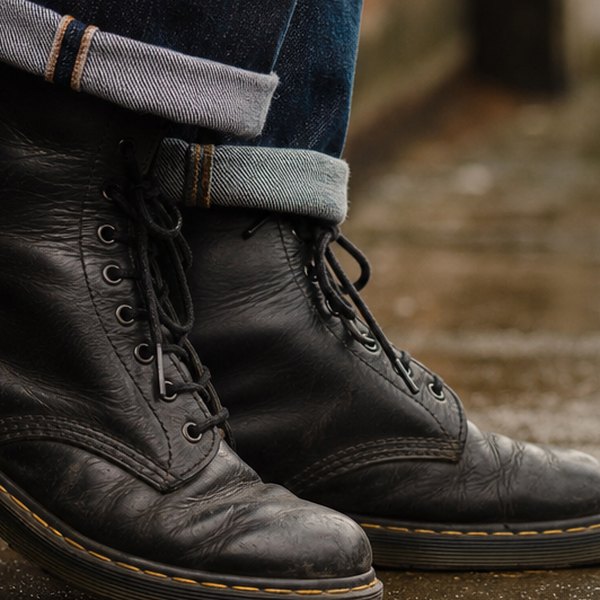
What does clothing signal before you speak?
Take the turned-up jean cuff. At various points in the last century that small fold of denim meant: I'm a Teddy Boy, I'm a punk, I'm a skater, I'm a prep. Each time one subculture adopted it, they were making a precise statement to other members of that group. The collar up on a Harrington jacket did the same job in the 1970s. Particular trouser widths. Particular logo placements. Not decoration but grammar. Punctuation in a language that only specific people could parse.
Why do styles move from street to catwalk?
The mechanics work like this. A group that exists slightly outside the mainstream – whether economically, politically, or just socially – develops its own visual shorthand partly because it has no access to the mainstream's symbols and partly because exclusion is the point. The uniform says "you know, or you don't." For a while the code holds. Then something shifts: a magazine photographs it, a pop star wears it, a high-street chain reproduces it. The symbol gets amplified and in being amplified, it gets drained. It stops meaning "I am a member of this particular community" and starts meaning roughly nothing at all, just "this was fashionable recently." The language gets stolen and has to go off and invent new slang.
Why Fashion Moves
This is why fashion moves and why the people who've studied it can almost map the direction of cultural travel by watching what gets absorbed into the mainstream and when. The time lag between subculture adoption and high-street saturation has been getting shorter – a look that might have spent a decade as subcultural property in the 1960s can now get discovered, photographed, memed, manufactured, and exhausted inside eighteen months. The original speakers barely get to finish the sentence. For more on how culture processes and translates signals, see The Night Shift Your Brain Has Been Running Without Telling You.
Most Wearers Never Know
What makes this genuinely strange is that most people wearing the garment don't know any of this. They just liked the look. And that's arguably the whole system working as intended – the meaning travels faster than the explanation, which is exactly how language works. You can use a word correctly without knowing its etymology.
So next time you're standing in front of a mirror deciding whether to pop that collar, just know: you're probably quoting someone, in a dialect you've never been formally taught, in a conversation that started long before you arrived.
Questions this raises
- Where do fashion subcultures borrow from?
- Is cultural borrowing in fashion ever fair?