Not the version you're seeing, anyway. What you think of as a flower – that cheerful, evenly coloured thing nodding in your garden – is a bit like a building with its entire signage, lighting and entrance system stripped off. You're seeing the shell. The bees are reading the manual.
Do insects see colours we cannot?
Here's the thing about bees: their eyes pick up ultraviolet light, which sits just beyond the violet end of the spectrum, completely off the edge of what human vision can register. Flowers have known this for millions of years. So they've done what any sensible business does when it has a best customer – they designed their welcome entirely around them.
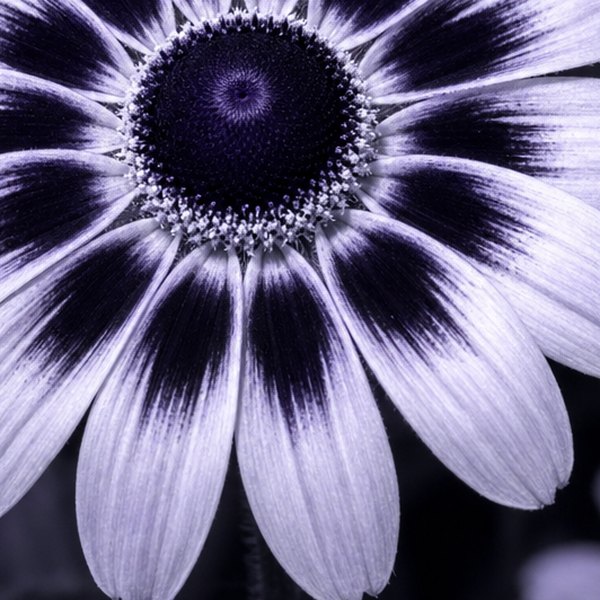
What do flowers look like to bees?
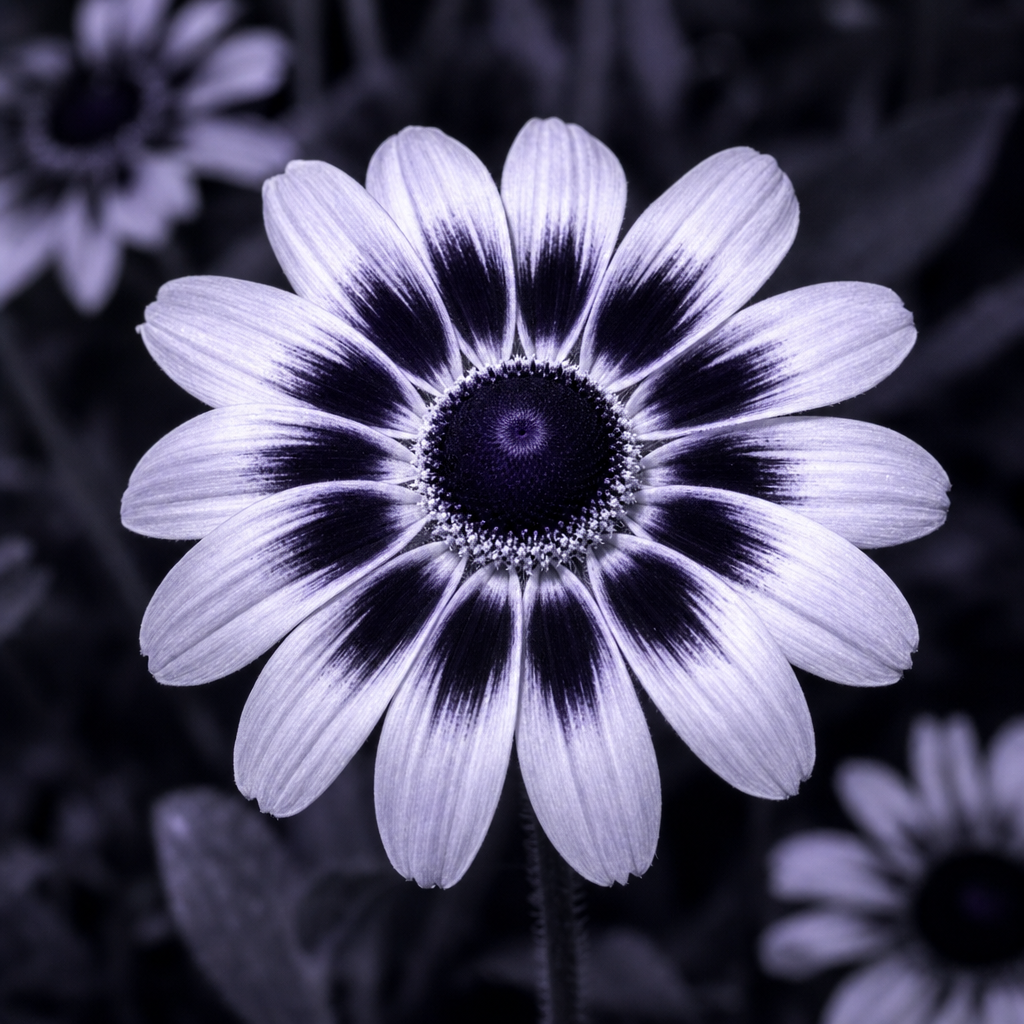
Under ultraviolet, petals that look plain yellow or white to us reveal bold, contrasting patterns radiating inward toward the centre. Dark bulls-eyes. Starbursts. Striped runways pointing directly at the nectary. Botanists call them nectar guides, which is sensible enough, but it undersells them rather. They're more like an airport that only exists in a frequency you can't tune into.
A black-eyed Susan – that common garden daisy with the yellow petals and dark centre – is fairly unremarkable to human eyes. Under UV photography, though, which gets us as close as we can get to borrowing a bee's view, it transforms into something else entirely: a dark central disc ringed by a bright halo and then darker petal bases pointing inward like arrows. The flower isn't just open. It's directing traffic.
Different Species, Different Targets
Different species do it differently. Some use a "bullseye" arrangement, one strong central target. Others use linear guides – parallel lines running along the length of each petal toward the middle, essentially a runway on every one. Poppies, which appear a flat uniform red to us, turn out to have a dark UV-absorbing central patch that creates a sharp contrast with their reflective outer petals. We see a poppy. A bee sees a target with a bright outer ring and a clear landing zone, the whole thing legible at a glance from several metres away.
The Pigments Doing the Work
The pigments responsible are flavonoids, naturally occurring compounds that reflect UV while absorbing it in patches to create contrast. Plants have been refining this system for roughly 130 million years, since bees and flowering plants more or less co-evolved together, each shaping the other in a long, silent negotiation. The flower needs the bee. The bee needs the flower. The patterns are the contract.
For a sense of just how strange our own perception is by comparison – and how often the world we think we're seeing is actually a heavily edited version – read [The Map in Your Head Was Printed Years Ago].
What strikes you, once you know about nectar guides, is this: the flowers haven't been keeping a secret exactly. They've just been talking in a language we were never built to hear. Next time you're looking at a garden border thinking it all looks rather lovely and simple, consider that every bloom out there is a piece of extremely sophisticated infrastructure. You just can't see the loading bay.
Questions this raises
- Why do flowers have ultraviolet patterns?
- How did flowers evolve to attract pollinators?