
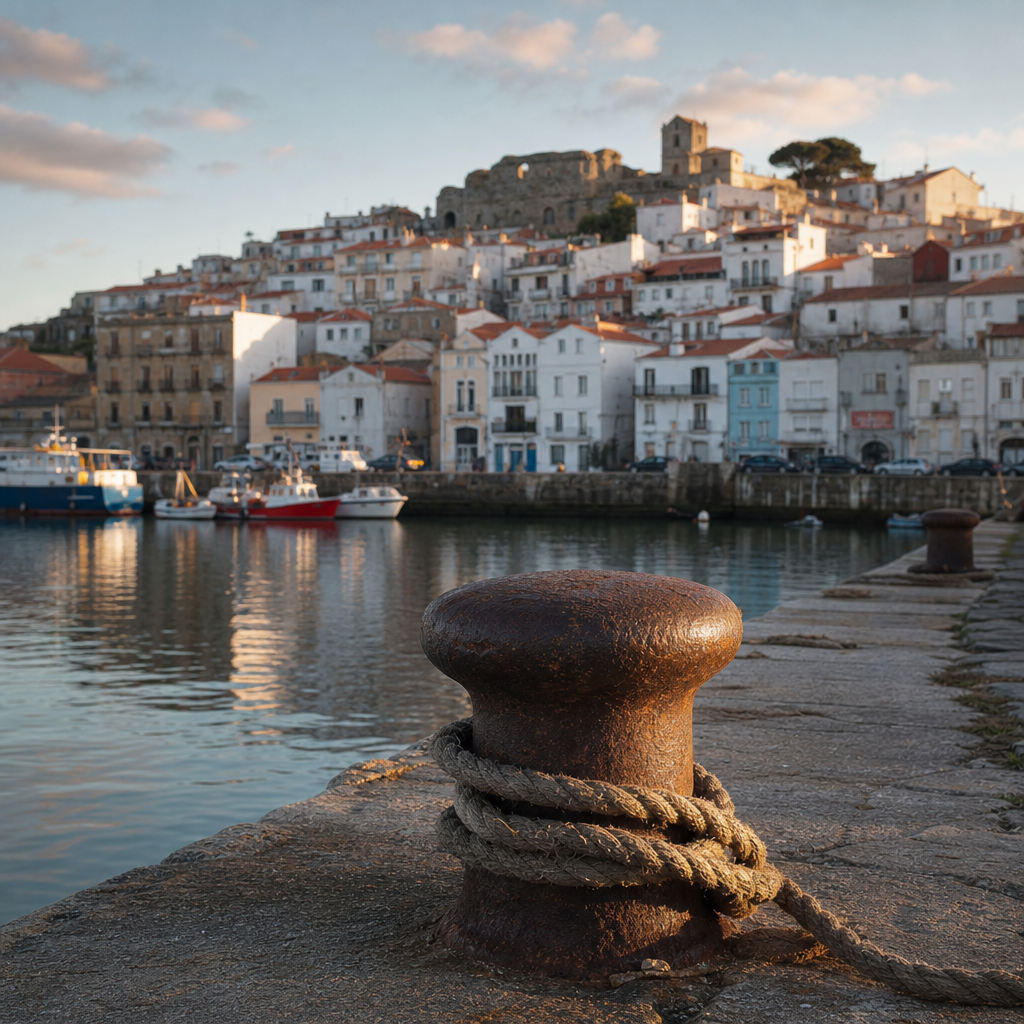
Before you've ever set foot somewhere, you've already been there. You've seen the photographs, the Instagram reels, the BBC Two documentary where a presenter stands on a harbour wall in a gilet and calls it "timeless." Your friend came back talking about the cobbled streets. You remember a scene from a film – was it a thriller? a romance? – where the camera tilted up at a cathedral you half-recognised. By the time you actually buy the plane ticket, your head contains a fairly detailed map of a place. The catch is, nobody stamped a date on it.
How does media shape travel expectations?
That map is a collage, and collages don't age gracefully. Your mental image of a Portuguese fishing town might be stitched together from a travel supplement printed in 2003, a photo your colleague showed you on her phone, two episodes of a cookery programme and a vague memory of something Anthony Blyth wrote in a paperback you left on a plane. Each of those sources was already historical when you absorbed it. The supplement photographed a quayside that was already changing. The cookery show was filmed eighteen months before broadcast. The place image you're carrying around is a kind of long-exposure photograph where every layer was taken at a different time, and none of them is now.
Destination Image Lag
Researchers in tourism studies call this "destination image lag," and it does some genuinely strange things to the experience of arriving. Seaside towns in England still carry reputations built when a week in Whitby meant something very specific – whelks, a guesthouse with a laminated menu, a donkey on the sand. The donkeys left a long time ago in most places. The guesthouses have had a redesign. But the image clings because images travel slowly; they pass through brochures, through family stories, through the cultural shorthand of "a bit like Scarborough" until they calcify into something that feels true even when it isn't.
Why do places feel familiar before you visit?
Cities work differently. A major city gets its internal map updated constantly – by films, by television series, by journalists and novelists – which is why somewhere like New York or Tokyo feels bizarrely familiar on a first visit. You know which direction is probably downtown. You recognise the fire escapes, the subway signs, the particular quality of light in an alley. Cinema has been running a quiet maintenance programme on your mental map for decades, and you have visited, in a sense, without going.
What Curious Travellers Do
What genuinely curious travellers do, consciously or not, is treat their arrival as a correction exercise. They expect the gap. They're not disoriented when the harbour no longer smells of fish, or when the edgy neighbourhood from the guidebook is now full of interior-design shops. They're interested in the distance between the picture they brought with them and the place that's actually there – which is usually the most interesting thing to look at. (Incidentally, the problem of images and time and what a photograph captures is worth turning over more generally. There's something good on exactly that at The Photograph That Was Out of Date Before It Was Developed.)
The picture in your head is real information. It's just old information. And the gap between those two things is, pretty much, what travel is.
Questions this raises
- What is destination disappointment?
- How do you travel with fewer preconceptions?