
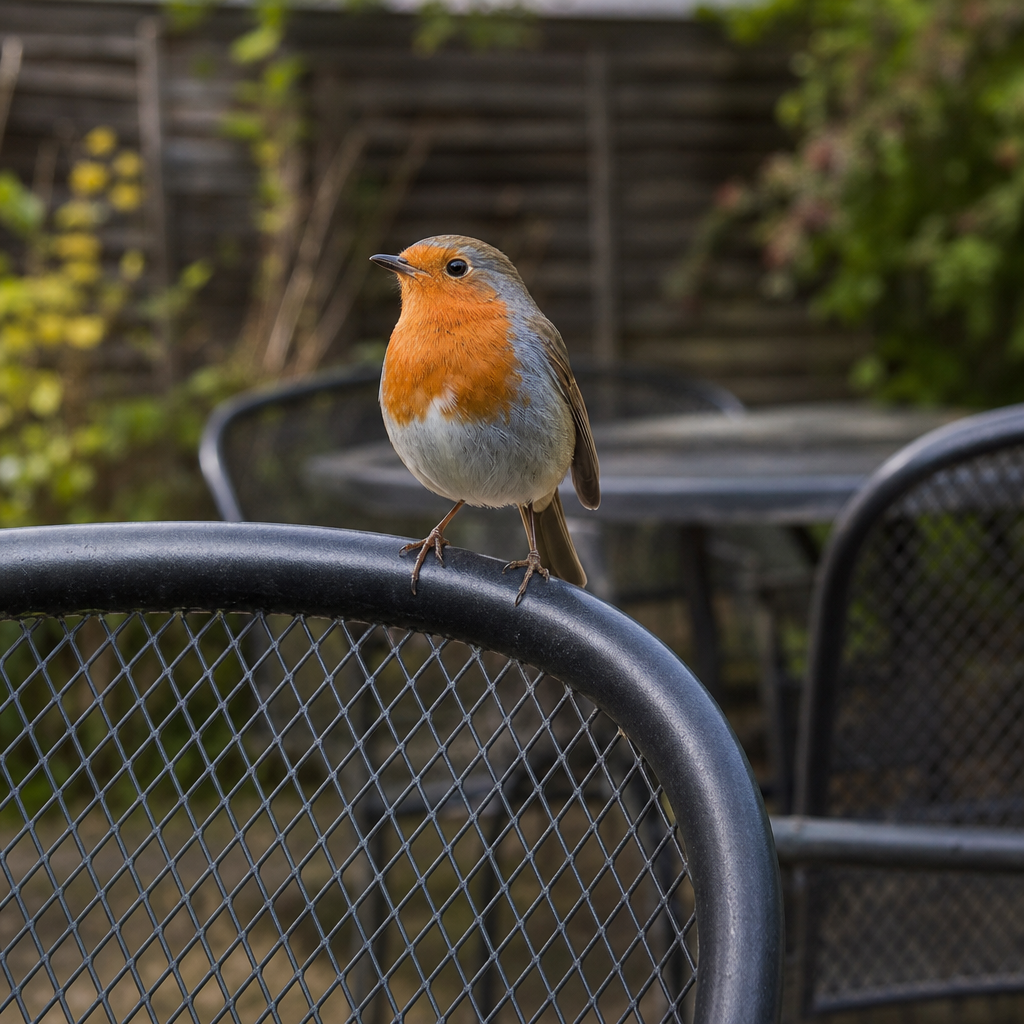
There's a moment every spring when a robin lands on a fence post, puffs up its chest, and holds perfectly still. It looks meditative. Peaceful, even. Like a little bird having a quiet think about life. It is not. It is, in fact, issuing a threat so specific and so aggressive that if you painted a red circle on a smooth stone and placed it in its territory, the robin would attack the stone.
What the Researchers Tried
Which is exactly what researchers did. They tried red ping-pong balls, bundles of loose red feathers with no body attached, and a stuffed robin with its breast painted over in brown. The living bird attacked the feathers, left the legless imposter alone, and went for the ping-pong ball. The robin is not looking at a rival – it's looking at a colour. The red breast isn't a signal to mates or a warning to predators. It's a direct threat aimed at one audience only: other robins. And other robins read it instantly.
Close to a Credit Score
What they're reading, it turns out, is something very close to a credit score.
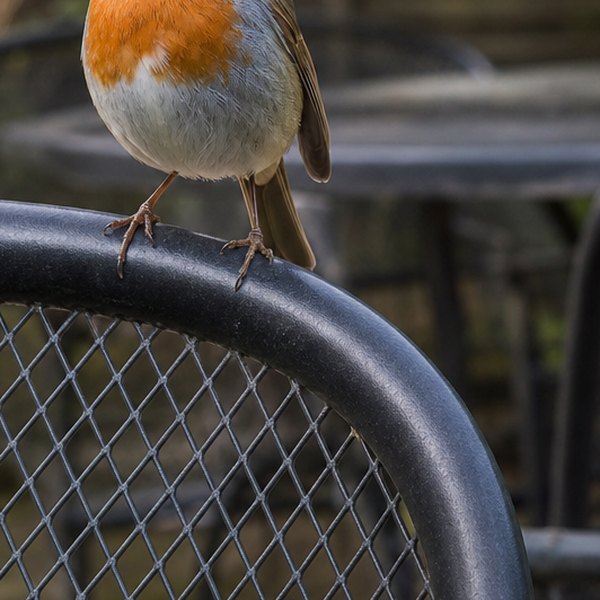
A robin's red patch varies quite a lot between individuals – brighter, duller, wider, narrower. That variation maps almost perfectly onto territory quality and mating success, with robins carrying broader, more vivid breasts winning and holding better ground. Usually not through fighting, though. Through being seen. A larger, brighter breast functions as visible standing, a kind of walking record of how the bird has performed over time, displayed in real time, impossible to fake. Other robins assess it in a glance and adjust their behaviour accordingly. If the patch is impressive enough, the smaller bird backs off without a scrap – no blood, no noise, just the reading of a colour and a quiet retreat.
The Breast Is Not Just a Badge
This matters because the breast isn't just a badge the robin carries around. It's a live signal. Condition affects brightness – a bird that's eating well and holding good ground tends to show a richer, deeper red, though the relationship is complex and researchers are still working out exactly which factors drive which changes. What's clear is that the colour functions as information, not decoration. There's a parallel here worth thinking about: the most useful signals in the natural world tend to be the ones that are genuinely hard to fake. The robin's red isn't costly in the way a peacock's tail is costly, but its honesty comes from somewhere – probably fitness, probably condition, possibly something about how pigments are processed in a bird that's genuinely doing well. If you want to see how the same logic plays out in other kinds of reputation, The Reputation Economy Nobody Tells New Bloggers About takes a different but oddly similar angle.
Are robins really friendly to gardeners?
The other strange thing about the robin's red breast is how narrow its actual audience is. Humans see it and feel warmly about Christmas cards. Predators are more or less unmoved. But another robin twenty feet away sees a declaration, a claim, a standing challenge hanging in the air between two fence posts. All that from a patch of orange-red the size of a fifty-pence piece.
So next time a robin lands near you and holds still, know that you are not the point. The performance is for someone you probably can't see yet.
Questions this raises
- Why are robins so territorial?
- Do robins attack their own reflection?
- How big is a robin's territory?