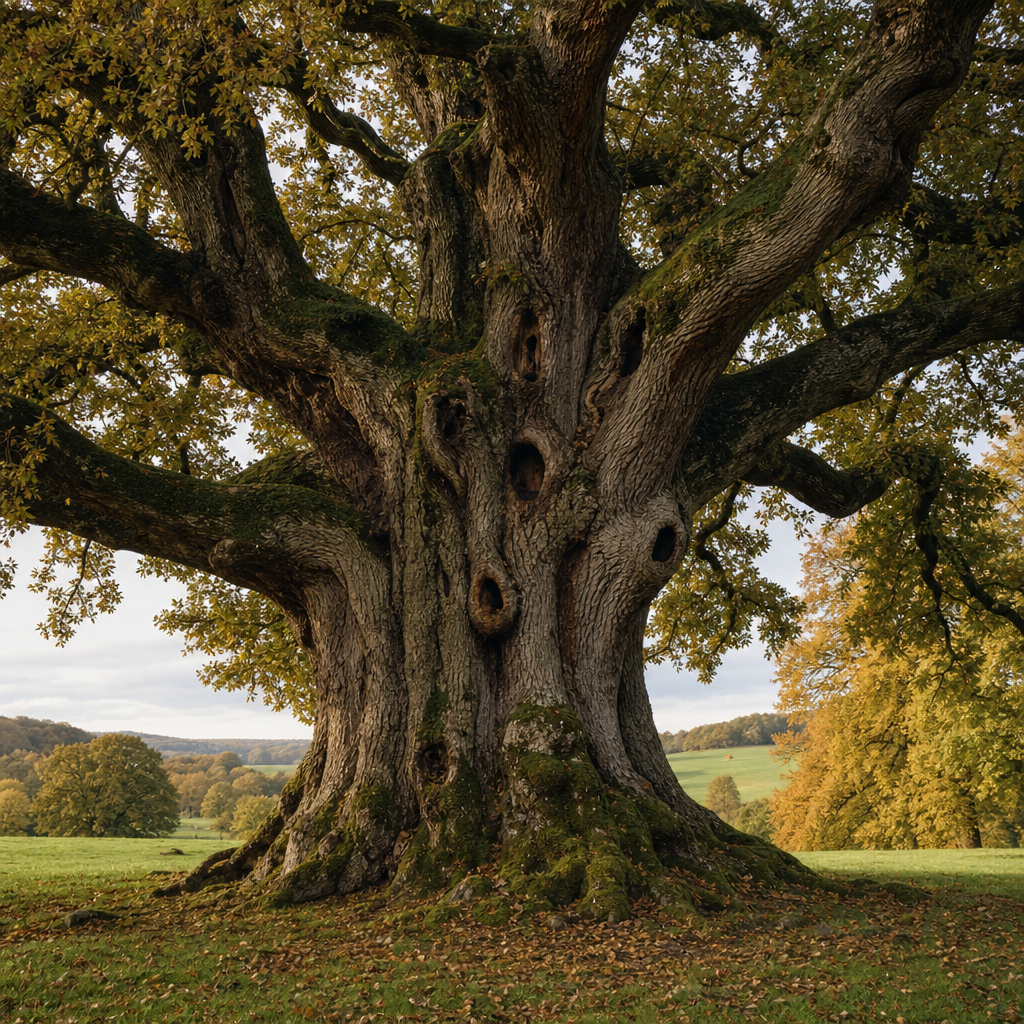
Stand in front of an old oak on a dull Tuesday morning and you could be forgiven for thinking absolutely nothing is happening. It just stands there, being a tree. A bit mossy. Slightly dramatic in silhouette. But that oak has been at work since before your alarm went off – and the operation it's running makes most local authorities look underprepared.
Housing
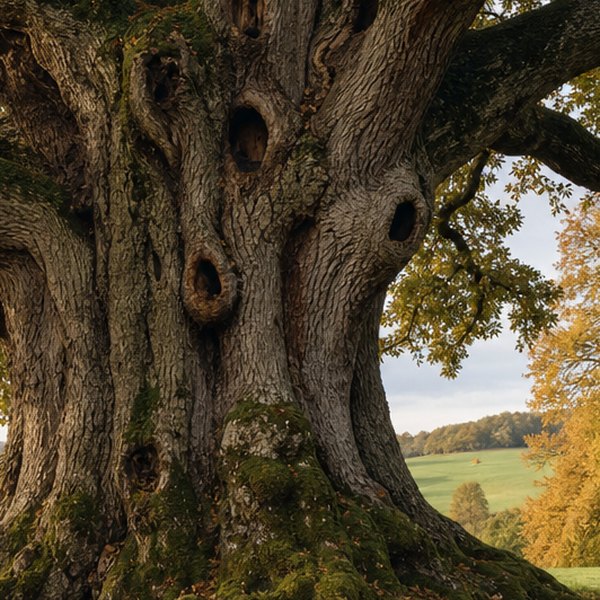
Start with housing. A mature oak – we're talking 200 years or older – develops hollow cavities over time as old branches die back and heartwood softens. These aren't random defects. They're a waiting list. Tawny owls take the largest chambers. Smaller holes lower down go to nuthatches and great tits, and bats colonise narrow cracks in the bark that nothing else would bother with. The allocation doesn't happen by chance; each species needs a specific diameter, a specific height, a specific aspect. The tree doesn't advertise, but occupancy rates are extraordinary.
The Food Bank
Then there's the food bank, running year-round but peaking spectacularly in autumn. A single mature oak can drop somewhere in the region of 70,000 acorns in a good year. Jays bury them and forget where most of them went – this is how the oak has been colonising new ground for millennia, outsourcing its own dispersal to a bird with a bad memory. Squirrels, wood mice, deer, badgers, and half a dozen bird species all draw on the same crop simultaneously, with enough left over to actually become trees. It's a distribution network, and the tree doesn't charge.
The Water Board
The water board aspect is less obvious but no less impressive. A mature oak's root system can spread wider than the tree is tall, drawing up hundreds of litres a day and releasing much of it back into the air through its leaves. On a warm afternoon, a single large tree transpires enough water to meaningfully cool the local air temperature. You've probably noticed that parkland with old trees feels cooler. That's the water board doing its job.
And the Health Service
And then there's the health service, which is perhaps the strangest thing of all. Oaks are connected to their neighbours through mycorrhizal fungi – a web of fungal threads that links root systems across whole woodlands. When an oak comes under attack from caterpillars, it releases chemical signals through this network, and neighbouring trees receive them and begin producing tannins and other compounds that make their own leaves less palatable before the caterpillars even arrive. Early warning infrastructure. It predates the internet by approximately 400 million years.
For a piece on the remarkable ecological connections between trees and other species, The Dream We All Agreed to Keep Having is worth a read alongside this.
None of this requires a budget meeting or a planning committee. The oak just runs it all quietly, on the same Tuesday you walked past barely glancing at it.
Questions this raises
- How many species does an oak tree support?
- Why are oaks so valuable to wildlife?
- How long does an oak take to mature?
- Should dead wood be left in place?