
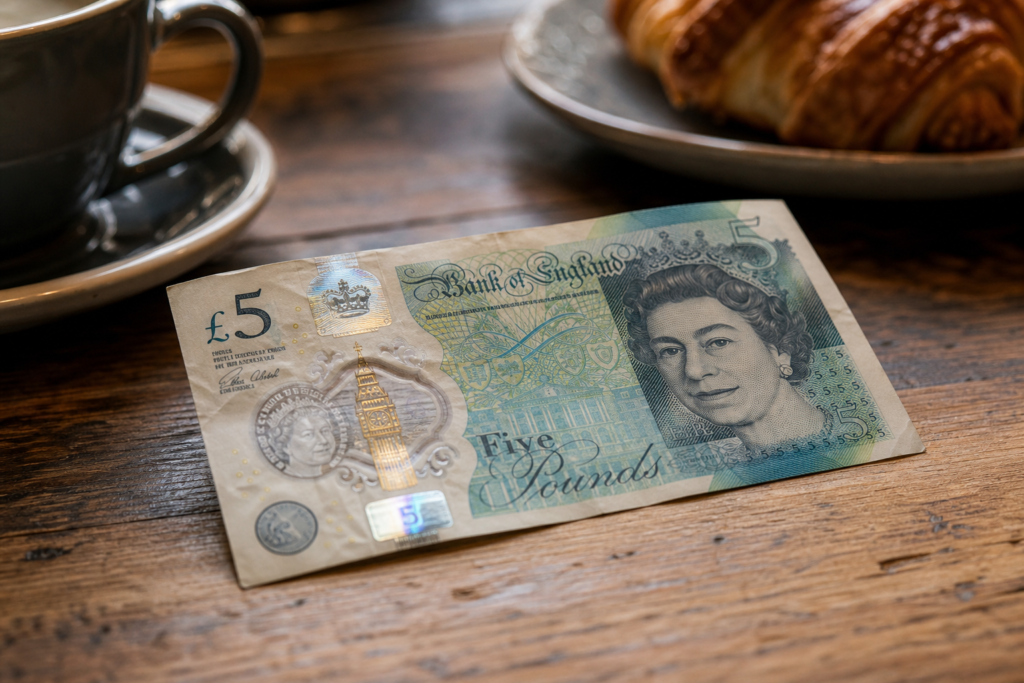
Pull a fiver out of your pocket and have a proper look at it. Not at the king's face, not at the holographic strip, but at what it actually is: a small rectangle of cotton and linen, worth almost nothing as a physical object. You could burn it in about four seconds. The ink would smell faintly of chemicals, the ash would blow away. And yet this morning, somewhere, someone handed one over for a coffee and a pastry without either party so much as pausing to think about how strange that is.
Because it is strange. The note isn't backed by anything sitting in a vault. There's no equivalent sliver of gold reserved in your name at the Bank of England. The promise printed on it – "I promise to pay the bearer on demand the sum of five pounds" – is a promise to give you another five-pound note, which is almost comedically circular. And the whole thing works entirely because everyone has collectively agreed, without ever discussing it, to keep believing it does.
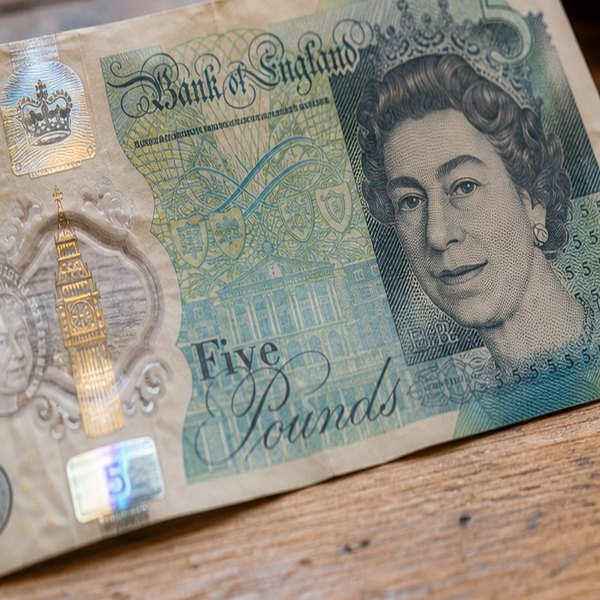
What is fiat currency?
This is what economists mean when they talk about fiat currency. Fiat is Latin for "let it be done", the same word used when something is decreed into existence. A fiat currency isn't worth anything intrinsic – it's worth something because a government says it is, and crucially, because the rest of us go along with it. It's a shared hallucination, and it's the foundation of every transaction you'll make today.
It Was Not Always Like This
It wasn't always like this. For centuries, the value of money was tied – officially, legally – to physical gold. The gold standard meant that every note in circulation represented a specific weight of the metal held somewhere real. Britain finally abandoned it in 1931, the United States in 1971. The reasons were pragmatic: wars are expensive, economies grow faster than gold supplies, and the sheer rigidity of linking currency to a finite lump of earth caused more problems than it solved. So governments cut the cord. The money kept working.
And that's the genuinely remarkable thing. Nothing catastrophic happened the moment the link to gold was severed. Nobody woke up to find their savings had evaporated overnight. The dream simply continued, now slightly more abstract, propped up not by metal but by institutional trust: in governments, in central banks, in the collective assumption that tomorrow morning a five-pound note will still buy roughly the same things it bought this morning.
What happens if people stop trusting money?
The psychology here is worth sitting with, because it explains a lot about how economies actually behave. Inflation isn't just a policy issue – it's what happens when confidence in the dream starts to flicker. When people stop trusting that a note will hold its value, they spend it faster, which makes it worth less, which makes others spend faster too. The currency doesn't change; the belief does. Zimbabwe in the 2000s, Weimar Germany in the 1920s – the mechanics were always psychological before they were financial, and once enough people stopped dreaming together, the whole thing unravelled with terrifying speed.
It runs in the other direction too. The reason the pound retains its value isn't gold, it's reputation. A stable government, a central bank with a credible track record, a legal system people trust – these are the actual contents of your wallet. For a broader look at how perception shapes financial value across history, The Colour That Cost More Than Gold is a fascinating detour.
Cryptocurrency Takes It Further
Cryptocurrency, incidentally, is the same logic taken to its endpoint. There is no government backing Bitcoin, no central bank, no legal decree. Just a very large number of people who've agreed to believe in it, sustained by code rather than institutions. Whether that makes it more honest than fiat money or simply more naked about its own precariousness is a question worth arguing about over a pint.
What you're left with, once you've stared at your fiver long enough, is something oddly philosophical: value is a social act. Money is not a thing, it's an agreement. Every price, every wage, every mortgage is a node in this vast ongoing consensus that enough of us keep maintaining to make it feel like solid ground.
It's not gold. It never really was. It's just a very old, very successful dream.
Questions this raises
- What actually gives a banknote its value?
- Why is money worth more than the paper it is printed on?