
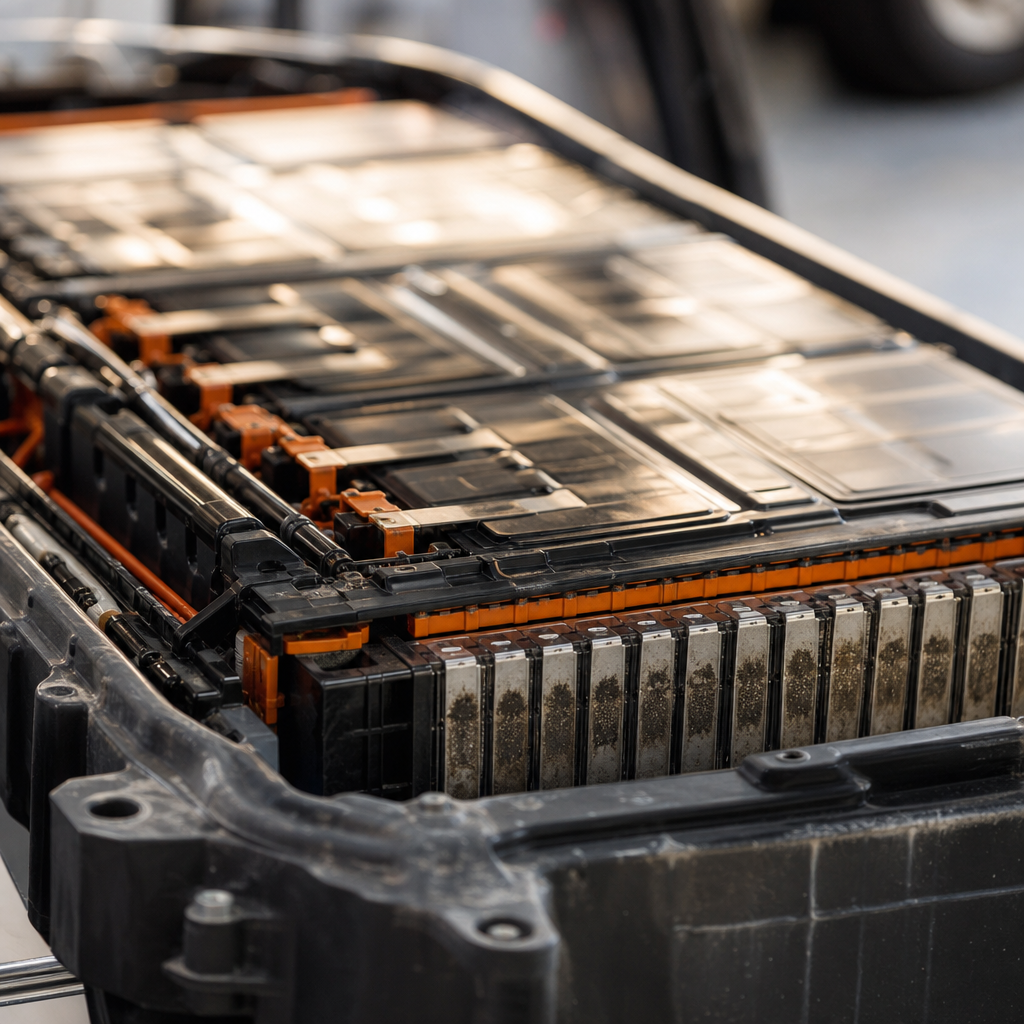
There's a version of your electric car that exists only in the first week you own it. Full of potential, fresh from the factory, its battery cells packed with lithium ions that move freely and enthusiastically between electrodes every time you charge or discharge. That version is already gone. Not obviously, not catastrophically – just quietly, at a chemical level, the way a new pair of leather shoes is already slightly less new the moment you walk to the car in them.
Why do electric car batteries degrade?
Here's what's actually happening inside the pack. An EV battery doesn't store electricity the way a bucket stores water. It stores it as chemistry: specifically, as lithium ions that shuttle back and forth between a graphite anode and a metal oxide cathode through a liquid electrolyte. Every time you charge the car, the ions migrate one way; every time you drive it, they come back. Or most of them do.
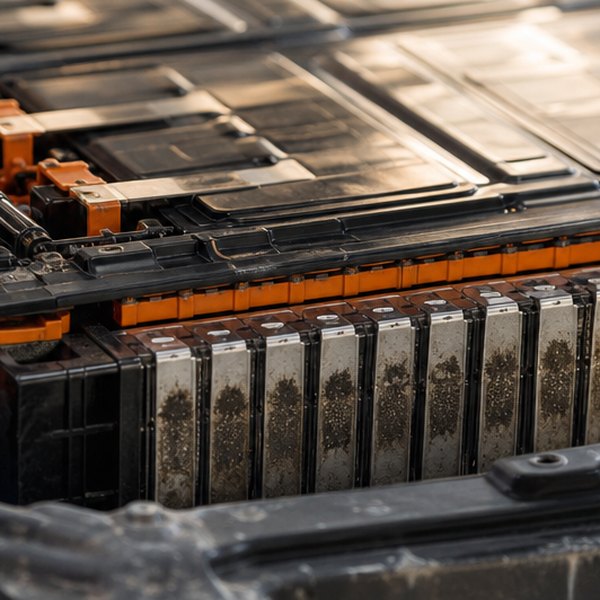
Over thousands of cycles, and just as importantly over time regardless of cycles, some of those ions quietly stop making the return journey. They get trapped, or they form tiny metallic deposits called dendrites that grow like microscopic stalactites inside the cell. Others get absorbed into a coating that builds up on the anode called the solid electrolyte interphase – which sounds like something from a physics lecture, but is basically the battery's version of limescale. Useful in small amounts, a problem as it thickens.
Capacity Shrinks Slowly and Invisibly
The result is that the battery's usable capacity shrinks, slowly and invisibly. The car you own in two years will be subtly different from the one you drove off the forecourt – not broken, not failed, just chemically older. The same way you're different from who you were two years ago. There's a piece on exactly this kind of slow, invisible change – how the version of a thing you think you have isn't quite the thing you have any more – over at The Colour You Think You Chose Two Years Ago, in a completely different context.
Heat and Full Charges Age It Faster Than Miles Do
The counterintuitive bit is this: heat and full charges accelerate this ageing far more than mileage does. Parking a car at 100% state of charge in summer heat is genuinely one of the worst things for a lithium-ion pack – the ions are under maximum mechanical stress, the electrolyte breaks down faster, and the SEI layer grows more aggressively. Most manufacturers quietly recommend keeping the daily charge between 20% and 80% for exactly this reason. Fast charging does similar damage in concentrated bursts: useful occasionally, but not something the cells particularly enjoy as a habit.
Cold slows the chemistry down, which is why range drops in winter – the ions become sluggish – but it also preserves the battery over the long term. A car stored cold degrades more slowly than one baking in a car park.
None of this means EVs are a bad idea or that the degradation is dramatic. Most modern packs lose somewhere in the region of two to three percent capacity per year under normal use. The battery is a living, changing thing rather than a static component. And treating it a little thoughtfully – keeping charges modest, avoiding unnecessary heat – is the closest thing to giving it a longer life.
Questions this raises
- How much range do EV batteries lose per year?
- Does fast charging damage a battery?
- What is a typical EV battery warranty?