

Nobody tells you this when you're standing in the showroom, half-convinced by the smooth acceleration and the fact you'll never queue at a petrol station again. The interesting thing about an electric car isn't the motor – it's the battery. And the battery isn't really like a fuel tank. It's more like an organism. One with moods, a memory, and some genuinely inconvenient opinions about how you treat it.
Inside the Cells
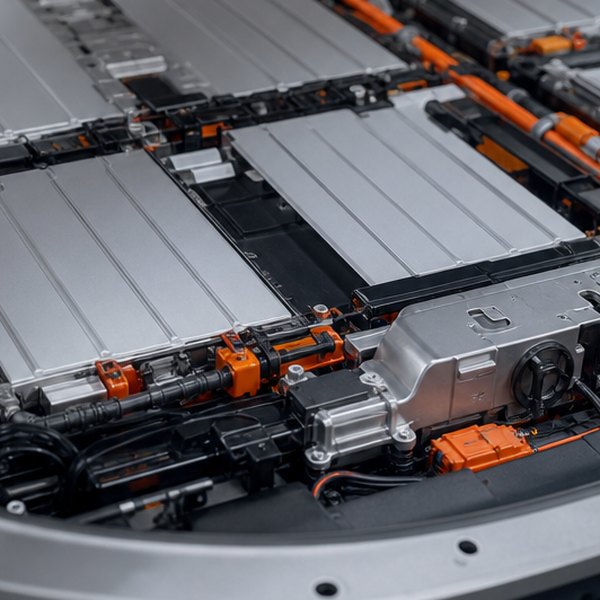
Here's what's actually happening inside those cells. A lithium-ion battery is a city of ions – lithium ions specifically – shuttling back and forth between two electrodes, a cathode and an anode, depending on whether you're charging or discharging. When you plug in, ions migrate to the anode; when you drive, they migrate back. That's the whole trick. But here's the thing: the electrodes aren't inert containers waiting patiently to be filled and emptied. Every cycle stresses them slightly. Tiny structural changes accumulate, and the city gets a little shabbier each time.
How should you charge an EV day to day?
This is why charging to 100% every single night isn't quite the obvious good idea it sounds. At a full charge, the anode is stuffed with ions and under real physical stress. Leave it like that for hours overnight and you're accelerating a slow, invisible degradation. Most manufacturers quietly set 80% as the recommended daily ceiling, and some cars default to it unless you override them. The battery isn't being fussy. It's protecting itself.
The most useful chemistry, it turns out, happens in the middle of a charge cycle rather than at the extremes – somewhere between 20% and 80% the cells are relaxed, the ion movement is smooth, the stress is low. It's a bit like how the brain does its most restorative work somewhere in the middle of a night's sleep rather than the moment your head hits the pillow or when the alarm goes off. If you've read anything about what the sleeping brain is actually up to, The Night Shift Your Brain Has Been Running Without Telling You covers the parallel rather nicely.
Why does an electric car behave differently in cold weather?
Cold weather is where it gets even stranger. Charge a lithium-ion battery at below about 5°C and the ions don't move as freely. Some don't make it to the anode and instead plate themselves onto the surface as metallic lithium – a process called lithium plating – which permanently reduces capacity and, in bad cases, creates tiny filaments that can cause short circuits. This is why your range estimate collapses on a January morning. The battery hasn't forgotten the range; it's temporarily locked out of some of its own chemistry. Like trying to run a process your system doesn't quite have the temperature for.
A petrol engine doesn't particularly care whether you're cold, whether you left it full, or whether you use it hard every day. It's a mechanical object. The battery is something closer to a biological one – it degrades differently depending on how it's treated, lasts longer when kept comfortable, and has a ceiling it genuinely prefers you never reach.
None of this means electric cars are fragile or difficult. It just means they reward a slightly different relationship. Charge to 80%, plug in in a garage if you have one, and don't panic when January nicks your claimed range. The car isn't lying. It's just cold.
Questions this raises
- How does an EV battery management system work?
- What is battery conditioning?