
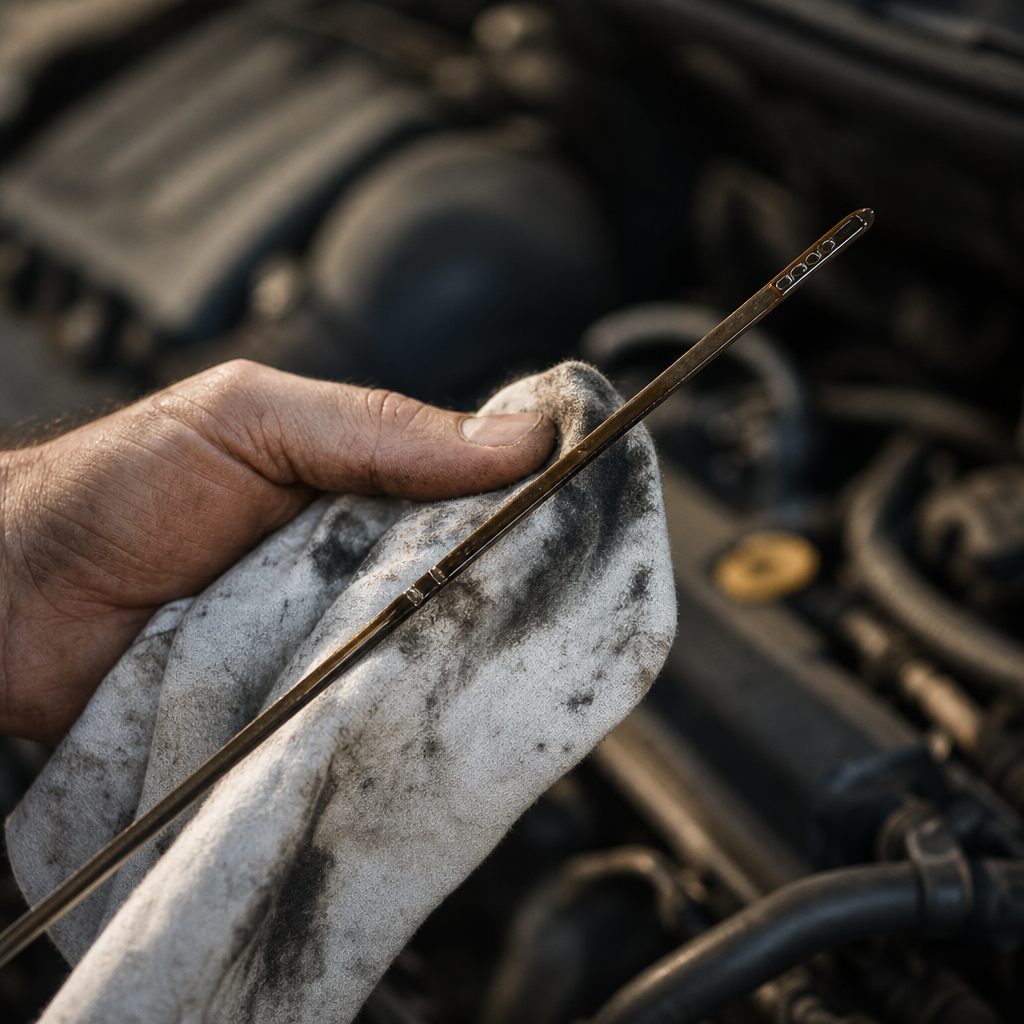
Drain the oil from an engine and refill it with fresh, and within a few miles it stops being fresh. It picks up microscopic flecks of metal, tiny particles of combustion, the residue of everything the engine has been doing under pressure. An engineer who knows what to look for can read that oil like a letter. Bearing wearing on the left? It's in there. Valve seal going? It's in there. The oil isn't just lubricating – it's carrying information, suspended invisibly, long before anything actually breaks.
Early education works on exactly the same principle. And almost nobody talks about it this way.
What You Consciously Took From School
The stuff you consciously took from school – the names of rivers, the formula for a quadratic, the dates of battles – that's not really the point. Most of it is gone by thirty. What the years of sitting in classrooms actually transferred was something more like a medium: the invisible stuff in which all the learning was suspended. Curiosity. The tolerance for not knowing yet. The habit of noticing when something doesn't quite fit. The instinct to ask "why does that work?" rather than just "what's the answer?".
That medium is the oil. And what the oil carries matters far less than the oil itself.
Why Two People in One Lesson Differ
This is why two people can sit in the same lesson, read the same text, pass the same exam – and one of them goes on reading for the rest of their life while the other puts the books down the moment the pressure is off. The content was identical. The medium wasn't.
The Quality of Mental Flexibility
What's in a good early education is a particular quality of mental flexibility. The ability to hold a half-formed idea long enough to turn it over, and the understanding that being confused isn't failure – it's just the first stage. Psychologists call some of this "epistemic curiosity", which sounds grand but really just means you find not-knowing interesting rather than intolerable. That disposition, once it's in you, doesn't go away. It's the oil. It carries everything else.
For a look at how the same logic applies to what's suspended in your car's engine oil, The Car That Thinks in Oil.
The Medium Is Hard to Measure
The trouble is that the medium is hard to measure and easy to forget about. A school can report on exam results but can't easily report on whether students left with a functioning tolerance for ambiguity. So the measurable stuff – the facts, the content, the curriculum – gets all the attention, and the invisible stuff gets squeezed out in favour of whatever's being tested this year.
This isn't an argument against teaching facts. Facts are real and useful. But they're the particles suspended in the oil – not the oil itself. Forget what the medium is made of, and the particles have nowhere to go.
Questions this raises
- Why does engine oil degrade so quickly?
- How often should oil actually be changed?
- What does oil analysis reveal?
- Does synthetic oil last longer?