
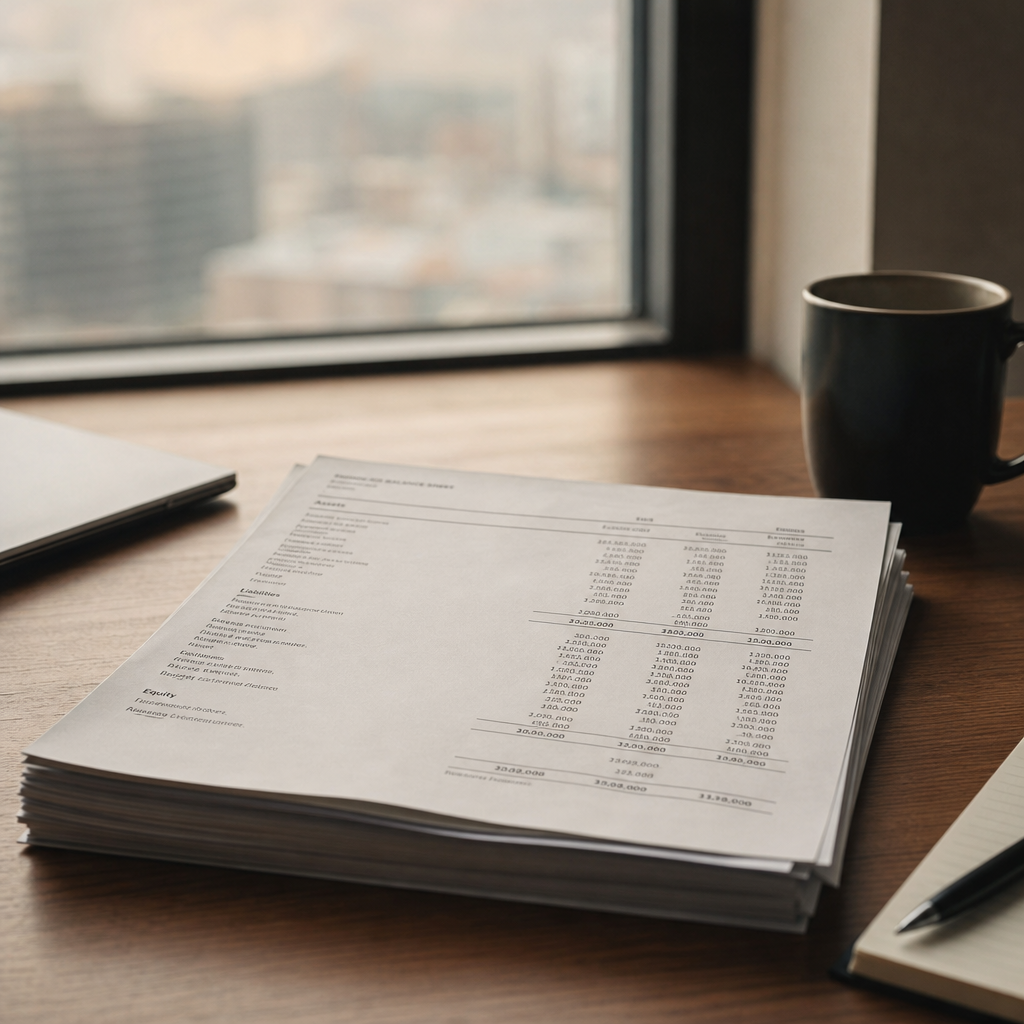
There is a photograph of you somewhere – maybe from a birthday, maybe from a holiday – where you look exactly like yourself. Same face, same expression. Completely accurate. And yet if someone showed that photograph to a stranger and said "here is what this person is like", you'd want to add a footnote. You've changed jobs since then. You've paid off that loan. You owe your sister fifty quid you didn't owe her then. The photograph isn't wrong. It just doesn't know what happened next.
A balance sheet works exactly the same way.
What does a balance sheet actually show?
Every business has to produce one: a single document that lists what it owns on one side and what it owes on the other, with whatever's left over belonging to the people who own the business. Assets, liabilities, equity. Clean columns, tidy numbers. And because it's numbers, people tend to treat it as the truth about a company in the way they'd never quite believe a photograph was the truth about a person.
Why is a balance sheet snapshot misleading?
But a balance sheet is always dated. It says, in effect: "this is where things stood on the evening of 31st December" or whichever day the camera clicked. On the 1st of January the company could have borrowed a million pounds, lost its biggest customer, or found out its warehouse roof needs replacing – none of that appears. The sheet just sits there, serene, already fibbing slightly by omission.
Even the Day It Is Taken Is Blurry
Even what's inside it on the day it's taken can have a complicated relationship with reality. A building your company owns will appear on the sheet at the price it was bought for, possibly decades ago. A brand that took twenty years to build and is genuinely your most valuable thing might not appear at all – because intangible assets are notoriously awkward to photograph. A debt that's due tomorrow looks identical to a debt that isn't due for three years. The image is accurate in its way, but accuracy and the full picture are not quite the same thing.
This is worth knowing because the balance sheet tends to be treated as the answer, when it's really a question. Is that pile of assets actually worth what it says, or has the market moved? Are those debts manageable, or is one of them about to become urgent? A photograph of someone standing confidently doesn't tell you they're about to miss a step.
The Same Applies Outside Accountancy
The same blur applies everywhere outside accountancy too. The moment a car was last serviced. The last time someone checked what their engine is actually doing rather than what the dashboard reports. There's a useful piece on that at The Car That Thinks in Oil. The logic is surprisingly similar: a number recorded at a single point in time keeps getting used well past the moment it was true.
Which is why the most useful thing you can do with a balance sheet is hold it slightly loosely – not distrust it, but remember that the company was already moving the instant the shutter clicked.
Questions this raises
- Why do company accounts go out of date so quickly?
- How often should accounts be reviewed?